
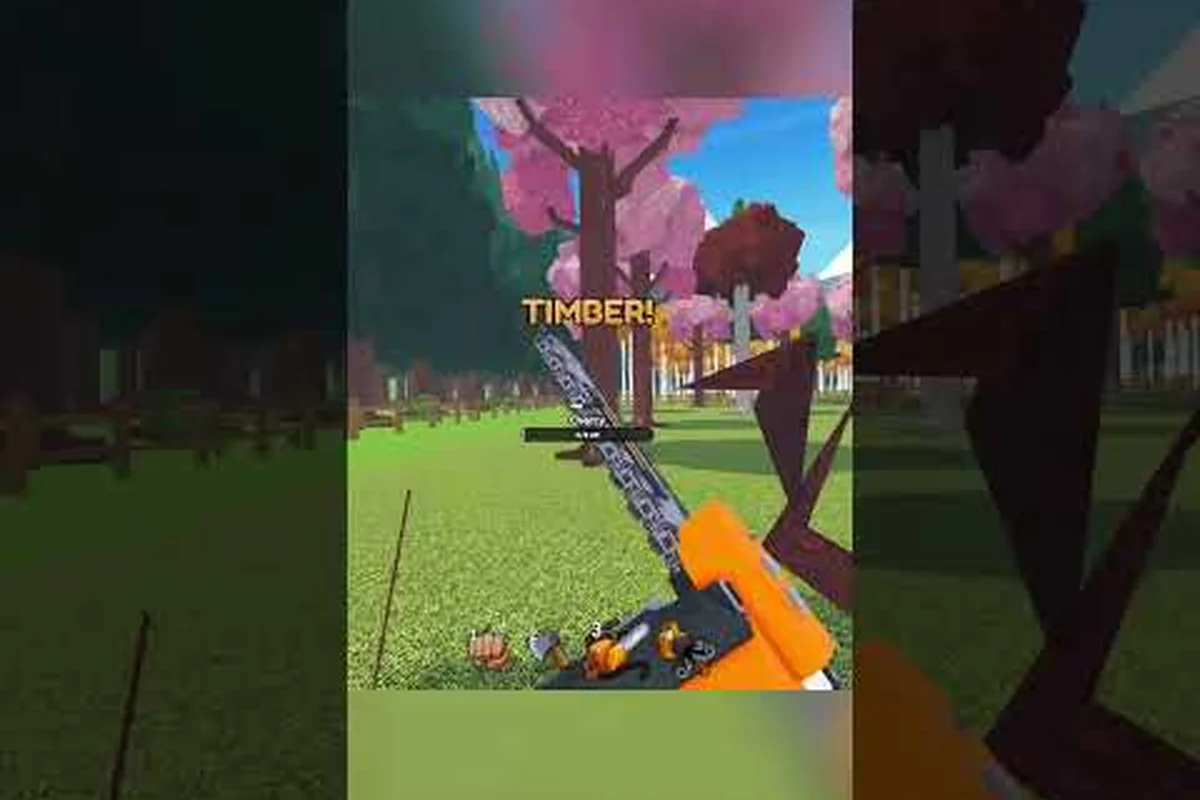
Speed defines the entire Chop A Forest gameplay loop, because every Coin you earn depends on how fast you swing at trees and how quickly you can haul the resulting logs back to the sawmill. Getting a handle on the Chop A Forest speed upgrade path early is what separates players who are still stuck punching the first tree from those who are already chaining Steel-Axe runs across the whole map. This guide breaks down exactly which upgrades raise your walk speed, which perks push your cutting power higher, and how to spend your first few hundred Coins so the pace of the game finally clicks. ready chaining Steel-Axe runs across the whole map. This guide breaks down exactly which upgrades raise your walk speed, which perks push your cutting power higher, and how to spend your first few hundred Coins so the pace of the game finally clicks, and when you're ready to lock in the single biggest damage jump for that loadout, our Chop A Forest Best Axe tier list shows exactly which blade to chase first.
According to the official Chop A Forest game page on Roblox, the most effective way to maximize your chopping efficiency is to invest in the speed upgrade as soon as it becomes available, since it directly reduces the time between each swing and lets you clear trees at a noticeably faster rate.
For players looking to get the most out of every swing, applying a chop a forest speed upgrade to the appropriate tool category is the single most impactful change, as detailed on the Chop A Forest page, where each upgrade tier lists the exact percentage gain to swing and chop speed so you can plan your progression around the most efficient boosts.
What Counts as a Speed Upgrade in Chop A Forest
Chop A Forest is structured around a single resource loop: swing at a tree, pick up the logs it drops, carry them to the sawmill, and dump them for Coins. Three numbers drive that loop, and every speed-related upgrade in the game touches at least one of them. According to the official Chop A Forest page on Roblox, the Axe is the first purchase most players make because it increases cutting power per swing, and the rest of the early upgrade tree is a series of multipliers on top of that baseline.
The first number is swing frequency, which controls how many chops per second your tool can land. The second is cutting power, which controls how many hits a tree needs before it breaks into logs. The third is walk speed, which controls how long it takes you to get from a felled tree back to the sawmill. The grasp perk sits in a fourth category because it does not change how fast you swing or walk, but it changes how many logs you can carry per trip.
| Speed Variable | Where It Shows Up | First Source |
|---|---|---|
| Swing frequency | Tool tier (Axe, Saw, Chainsaw) | Tool shop |
| Cutting power | Tool tier + perk upgrades | Tab menu |
| Walk speed | Boots + perk upgrades | Tab menu |
| Carry capacity | Grasp perk levels | Tab menu |
That is why a pure Chop A Forest speed upgrade strategy is rarely about one stat. Most new players find the biggest jump by combining a better tool with a walk-speed perk, because doubling your cut rate means nothing if you are still crawling back to the sawmill at the default pace. The community consensus, reported across the Chop A Forest Discord, is that the first 500 Coins should always go into a balanced build rather than one stat at a time.
How Cutting Power Ties Into Speed
Cutting power is the stat most players confuse with raw swing speed, but in this game it is actually a hits-per-tree counter. A higher cutting power means fewer swings to break a tree, which means more trees per minute even when your swing frequency stays the same. That is the core reason the Axe at 150 Coins is treated as the cornerstone upgrade: it raises your cutting power well above the bare-handed baseline, and from that point onward every other cutting power upgrade is a multiplier on a value that has already been raised.
Tool Tiers That Drive the Speed Upgrade Path
Tools are the biggest source of speed in Chop A Forest, and each tier of tool roughly replaces the previous one as the new "best in slot" for raw cutting power. According to the official listing, the Axe is the first mandatory buy, and the rest of the progression is layered on top of it. The exact price of each tool shifts as the developer balances the economy, so the table below is built on community-reported numbers from the Chop A Forest Discord and may be revised in future patches.
| Tool | Approx. Coin Cost | Main Speed Effect | Best Use Window |
|---|---|---|---|
| Bare hands | Free | Lowest cutting power, slowest per-tree time | First minute only |
| Axe | ~150 Coins | Big jump in cutting power per swing | First 30 minutes |
| Saw | ~1,200 Coins | Faster swing frequency than Axe | Mid early-game |
| Chainsaw | ~6,000+ Coins | Highest cutting power in the shop | Mid-game onward |
| Late-game tools | Varies | Top-tier cutting power + AoE radius | Endgame farming |
A common mistake new players make is treating the tool list as a pure cost-versus-damage tier list, but in practice the per-tool speed upgrade is more nuanced than that. The Saw, for example, is not just a stronger Axe. It changes the feel of the game by letting you clear small trees in a single sweep, which is why the Chop A Forest best axe guide and the Chop A Forest best tools guide both treat tool choice as a playstyle decision rather than a simple linear upgrade.
Why the Axe Is the First Speed Upgrade Everyone Buys
Every Chop A Forest speed upgrade guide on the official Discord starts with the same advice: buy the Axe immediately. The reason is that the jump from bare hands to the Axe is the largest single cutting power increase in the entire game, and it happens at a price point that a brand-new account can reach within a few minutes of punching trees. Once the Axe is in your hand, every Coin you earn is being multiplied by a much higher base rate, which is why the Axe effectively pays for itself in the first batch of logs it clears.
The deeper logic is that a speed upgrade without a tool behind it is wasted potential. Even a fully maxed-out walk speed build will feel slow if you are still spending eight swings per tree, because the limiting factor shifts to swing frequency. That is why the Chop A Forest tool upgrade guide structure always places the Axe at step one, regardless of what perk path the player plans to follow afterwards.
Walk Speed Upgrades: Boots, Perks, and Movement Routing
Walk speed is the half of the Chop A Forest speed upgrade system that most underperforms early, because it is invisible until you actually start running longer routes. The default walk speed is fine for the first tree you cut right next to the sawmill, but as soon as you start chasing trees deeper into the forest, the time spent walking back begins to dominate the per-Coin earnings rate. The two sources of walk speed in the game are boots purchased from the shop and walk speed perks bought from the Tab menu.
| Source | Approx. Effect | When To Prioritize |
|---|---|---|
| Default movement | Baseline walk speed | Tutorial only |
| Tier 1 boots | Small walk speed boost | After first 200 Coins |
| Tier 2 boots | Noticeable route speedup | Once Saw is unlocked |
| Walk speed perk L1 | Flat +X% walk speed | Right after Axe |
| Walk speed perk L2+ | Stacking percentage boosts | Mid-game onward |
A useful framing is to think of walk speed as your "earnings multiplier on the return trip." If you double your walk speed, every log you bring back effectively counts for twice as much time, because the same number of Coins arrives in half the time. According to community testing shared on the Chop A Forest Discord, players who invested in walk speed perks before pushing for the Saw reported a smoother early-game economy than players who ignored movement entirely.
How Walk Speed Interacts With Map Layout
The Chop A Forest map is roughly circular, with the sawmill at the center and trees distributed in rings. Walk speed upgrades flatten that geometry: the further out you cut, the more valuable each percentage point of movement becomes, because a flat +20% walk speed saves more seconds on a 30-second route than on a 5-second route. That is why most walk speed upgrade advice in the community is conditional on how far the player is willing to walk, rather than a flat "always max walk speed" rule.
A practical walk speed upgrade path is to start with a single level of the perk as soon as the Axe is bought, because that immediately pays for itself on every single run. Beyond the first level, walk speed perks scale less efficiently than tool upgrades, so the Chop A Forest late game tools guide treats movement perks as a mid-game project rather than a first priority. The exception is when the player is running a dedicated log-farming build, in which case stacking walk speed and grasp together can rival a tool upgrade in raw throughput.
Grasp Upgrade: The Hidden Speed Multiplier
Grasp is the most underrated Chop A Forest speed upgrade in the early game, because it does not affect how fast you chop or walk, but it changes the size of each delivery you make back to the sawmill. The Chop A Forest grasp upgrade lets you pick up more logs per trip, which means the same number of trips now brings back two, three, or even more logs at once. From a time perspective, grasp is effectively a speed multiplier on the entire return leg of the loop.
| Grasp Level | Approx. Logs Per Trip | Real-World Effect |
|---|---|---|
| Base | 1–2 logs | Constant sawmill runs |
| Grasp L1 | 2–3 logs | Fewer return trips |
| Grasp L2 | 3–4 logs | Half the trips per tree cluster |
| Grasp L3+ | 4+ logs | Bulk log farming viable |
Community players report that grasp is the upgrade most worth stacking on a log-farming build, because it turns a single tree cluster into a single delivery. That is also why the Chop A Forest how to get logs guide treats grasp as a multiplier on top of the basic wood-farming loop, rather than a separate stat. If you can carry twice as many logs per trip, you are effectively doubling your earnings rate without touching either cutting power or walk speed.
When to Stack Grasp Instead of Walk Speed
The classic question on the Chop A Forest Discord is whether to stack grasp or walk speed first, and the answer depends on the distance between your cutting zone and the sawmill. For a player who cuts right next to the sawmill, walk speed is wasted and grasp dominates, because the time cost of the return trip is already near zero. For a player who is running deep into the outer rings, walk speed wins, because the return trip dominates the loop. Most players end up buying one level of each before specializing, which is exactly the balanced approach the official tool upgrade guide recommends.
A secondary effect of grasp is that it reduces the number of times you have to interact with the sawmill, which is a small but real source of idle time. The fewer times you touch the sell point, the fewer animation interruptions you hit, and that compounds over the course of a long farming session. This is the kind of detail that does not show up in a raw stats table but is consistently highlighted by experienced players on the Chop A Forest Discord.
Cutting Power Upgrades and How to Increase Them
Cutting power is the easiest stat to raise but the hardest to optimize, because every tool tier adds cutting power and every perk on top of the tool multiplies it. The Chop A Forest cutting power upgrade path is therefore a stack of layered effects: tool tier at the bottom, cutting power perks in the middle, and class passives at the top. According to the official listing, the Tab menu is where the perk layers live, and that is the screen most players should check after every tool purchase.
| Layer | Example Source | Effect Type |
|---|---|---|
| Base cutting power | Bare hands | Very low baseline |
| Tool tier | Axe, Saw, Chainsaw | Multiplicative jump |
| Cutting power perk L1 | Tab menu | Flat additive boost |
| Cutting power perk L2+ | Tab menu | Stacking additive |
| Class passive | Class shop | Conditional multiplier |
The Chop A Forest how to increase cutting power question usually comes down to two practical steps: get the best tool you can afford, and spend leftover Coins on the cutting power perk from the Tab menu. Because the perk stacks additively, every level you buy before the next tool tier is effectively wasted, which is why most guides recommend buying just one level of the cutting power perk as a "bridge" until the next tool is unlocked. The Chop A Forest best axe writeup uses the same logic, treating the Axe as the floor of the build and the Saw as the next ceiling.
The Mistake of Maxing Cutting Power Perks Too Early
A common early-game trap is dumping Coins into every level of the cutting power perk before upgrading the tool, because the perk numbers look big in the Tab menu. In practice, the same Coins spent on a higher-tier tool yield a much larger per-swing increase, because the tool's cutting power is multiplicative while the perk is additive. Community data on the Chop A Forest Discord suggests that players who delay perk upgrades until after a tool upgrade clear trees roughly 25–30% faster than players who do the reverse, although exact numbers vary with patch version.
The cleanest way to think about cutting power upgrades is that tools set the ceiling and perks fill in the gap below it. Buy the Axe first, then take one perk level, then save for the Saw, then take the next perk level, and so on. That is the cadence most experienced Chop A Forest players describe as the "smooth" upgrade path, because it keeps your per-swing rate rising steadily instead of in fits and starts.
Putting the Speed Upgrade Path Together
The full Chop A Forest speed upgrade plan is not a single stat but a sequence of choices, and the order of those choices matters more than the specific numbers. Below is a consolidated early-game path that combines the data above into a single priority list, drawn from community reports and the official progression hints on the Roblox game page.
| Priority | Upgrade | Approx. Coin Cost | Why It Comes First |
|---|---|---|---|
| 1 | Axe (tool) | ~150 | Biggest cutting power jump in the game |
| 2 | Walk speed perk L1 | ~100 | Pays for itself on every return trip |
| 3 | Grasp perk L1 | ~150 | Doubles effective logs per trip |
| 4 | Tier 1 boots | ~200 | Smooths out longer routes |
| 5 | Saw (tool) | ~1,200 | New swing frequency tier |
| 6 | Cutting power perk L1 | ~300 | Bridges the gap to the next tool |
| 7 | Walk speed perk L2 | ~300 | Stacks well with boots |
| 8 | Grasp perk L2 | ~400 | Bulk log farming unlock |
A balanced path like this is what most players on the Chop A Forest Discord describe when they talk about "feeling fast" for the first time. The Chop A Forest early upgrades writeup in the community wiki follows the same order, with minor variation depending on whether the player is running solo or with friends. Progress saves in both solo and friend runs, so the Coins and perks you stack here persist across sessions, which is why the order is worth getting right on the first attempt.
Matching Upgrades to How You Play
Not every player needs the same Chop A Forest speed upgrade order, because the game supports a few distinct build directions. A player who prefers short, intense runs near the sawmill should front-load grasp perks, because the return trip is short and bulk carrying is the limiting factor. A player who likes clearing the outer rings should front-load walk speed, because the return trip dominates the loop. A player who likes to push the tool progression as fast as possible should skip the perk bridge entirely and save straight for the next tool, accepting a slower ramp in exchange for a higher eventual ceiling. All three paths are valid, and the community treats them as different "classes" of speed build rather than a single correct answer.
Frequently Asked Questions
What is the first Chop A Forest speed upgrade I should buy?
The Axe at roughly 150 Coins is the first speed upgrade most players buy, because it gives the largest cutting power increase in the game and pays for itself within the first batch of logs. The official Chop A Forest page on Roblox confirms that the Axe is the cornerstone tool for every early-game build, and the community Discord repeats the same advice. After the Axe, a single level of the walk speed perk is the next best spend, because it improves every subsequent run.
How does the Chop A Forest grasp upgrade actually work?
Grasp raises the number of logs you can pick up per trip, which means fewer sawmill runs for the same number of trees felled. In practice, that turns a series of small deliveries into a single bulk drop, and it stacks additively with each perk level. The Chop A Forest how to get logs guide treats grasp as a multiplier on the basic wood-farming loop, because more logs per trip is functionally the same as a higher earnings rate.
Is walk speed or cutting power more important early?
It depends on how far you walk from the sawmill. If you cut right next to the sawmill, walk speed is wasted and cutting power dominates, because the limiting factor is how fast you can break trees. If you cut in the outer rings, walk speed dominates, because the return trip is the longest part of the loop. Most players buy one level of each before specializing, which is why the balanced build is the most common Chop A Forest speed upgrade path on the Discord.
Can I increase cutting power without buying a new tool?
Yes, the cutting power perk in the Tab menu adds a flat boost on top of your current tool, which is useful as a bridge between tool tiers. However, the perk is additive while the tool is multiplicative, so spending the same Coins on the next tool tier usually gives a bigger per-swing increase. The Chop A Forest cutting power upgrade guide recommends buying one perk level after each tool purchase, rather than stacking perks alone.
What are the best Chop A Forest early upgrades overall?
The Axe, a single walk speed perk level, and a single grasp perk level are the three upgrades that consistently appear in every early-game build. Together, they form the core Chop A Forest early upgrades path, and they cost less than 500 Coins in total. Once those three are in place, the rest of the build branches into a tool-focused, walk-speed-focused, or grasp-focused path depending on your playstyle.