
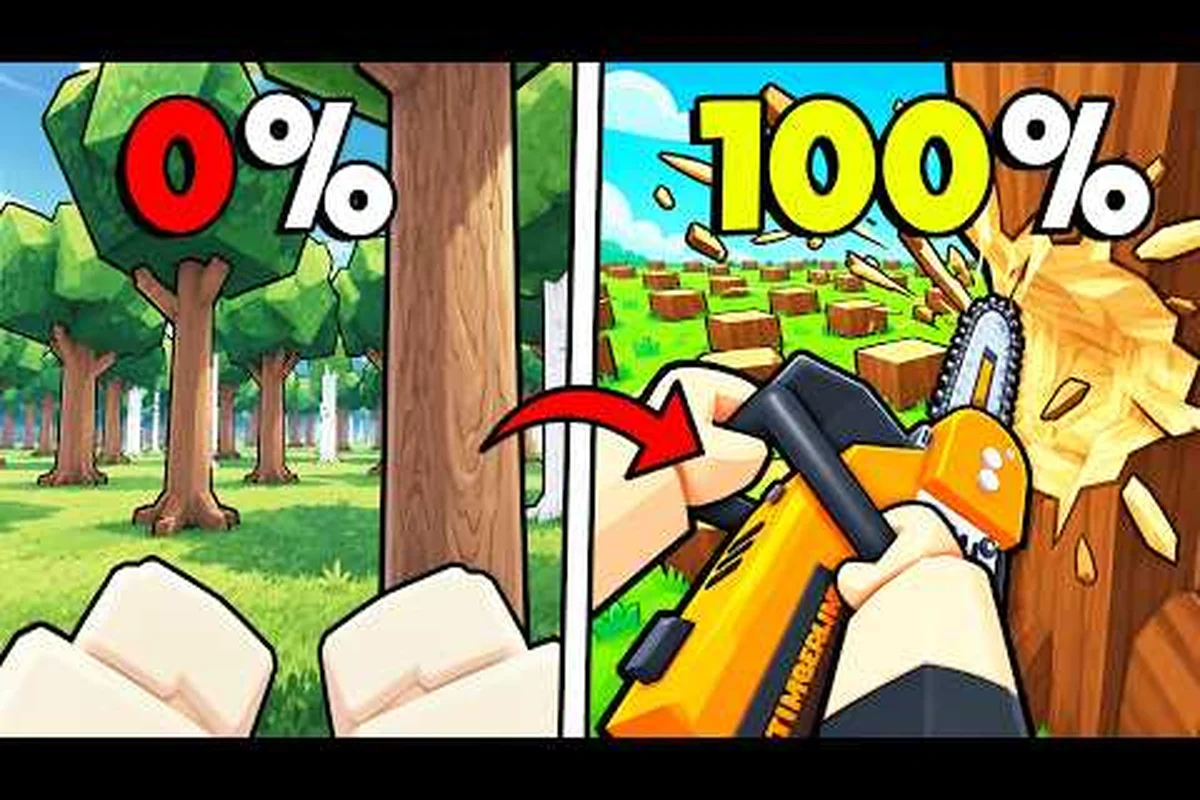
Zone bosses in Chop A Forest are the most reliable source of bonus loot, gear upgrades, and progression milestones in the entire game. Every time a player clears a forest zone, the last tree triggers a special encounter — and defeating that encounter hands out rare drops that no amount of normal chopping can match. This guide breaks down the Mace Giant encounter, the mechanics that govern boss spawns and respawn timers, and the farming routes experienced players use to stack boss rewards across multiple sessions. ops that no amount of normal chopping can match. This guide breaks down the Mace Giant encounter, the mechanics that govern boss spawns and respawn timers, and the farming routes experienced players use to stack boss rewards across multiple sessions, while our detailed breakdown of Chop A Forest Zone Boss Respawn explains how spawn windows in that adjacent zone can be chained into the same loop for even faster soul and shard turnover.
Living Off Boss Farming: Drops, Rewards, Respawn
Chop A Forest is built around a simple loop: enter a zone, chop trees, gather resources, and clear the last tree to unlock the next area. That final tree, however, does more than just open the path forward — it spawns a zone boss. According to the official Chop A Forest Roblox page, beating these bosses grants bonus drops and rewards before the next zone unlocks, which means each clear is a two-for-one opportunity: progression plus rare loot.
The Last Tree Trigger Mechanic
When a player chops the last tree in a zone, a scripted event fires and a boss spawns at the cleared clearing. The encounter must be completed before the next zone becomes accessible, so the boss effectively functions as a gate plus a reward tier. The mechanic is consistent across all zones, so once players learn the rhythm, the loop becomes predictable and farmable.
| Step | What Happens | Player Action |
|---|---|---|
| 1 | Enter a new zone | Identify tree clusters and start cutting |
| 2 | Chop trees one by one | Use your strongest axe and any class that boosts cutting power |
| 3 | Chop the final tree | The boss spawns immediately at the clearing |
| 4 | Defeat the zone boss | Collect drops and rewards from the corpse |
| 5 | Zone unlocks | Move to the next area with the new loot in your bag |
Why Bosses Matter for Progression
Zone bosses drop items that meaningfully accelerate growth. Community reports from the WCT Capital community hub note that boss drops often include materials and gear fragments that take far longer to obtain through normal chopping. The Mace Giant, in particular, is known to drop components used in higher-tier recipes, which is why farmers target him on repeat runs instead of treating the encounter as a one-off event.
The Mace Giant Boss Encounter
The Mace Giant is the most documented zone boss in Chop A Forest, partly because it appears in early-game zones where most players first encounter the boss system. It serves as the template for how every zone boss works: high hit points, heavy damage, and a clear reward window once defeated.
Mace Giant Combat Profile
The Mace Giant hits hard and has more health than any standard enemy in its zone. Because the fight leans on raw power and carry capacity rather than movement speed, players who load in with weak gear will struggle to finish the encounter before getting knocked out. Community testing suggests the Mace Giant scales with the zone, so later appearances of the boss-type come with a tougher stat block than the early encounters.
| Attribute | Mace Giant | Standard Zone Enemy |
|---|---|---|
| Health | Very high | Low to medium |
| Damage per hit | Heavy | Light to moderate |
| Movement speed | Slow | Fast |
| Primary attack | Mace swing | Bite, claw, or lunge |
| Weakness point | Head | Body |
| Drop tier | Rare | Common |
Recommended Setup for the Mace Giant
The Mace Giant rewards players who bring the strongest class and the best cutting stats they have at that stage of progression. Because the encounter does not require fancy movement tech, players can focus entirely on stacking damage and survivability before triggering the fight. Bringing extra carry capacity is also useful, because the Mace Giant's drop list can fill an inventory quickly on a single kill.
-
Strongest class available — pick the class that boosts your damage or health pool
-
Best axe in your inventory — a higher-tier axe shortens the time-to-kill dramatically
-
Consumables for healing — the Mace Giant can two-shot undergeared players
-
Empty or near-empty inventory — you want maximum carry capacity for the drop haul
-
Optional party members — co-op runs reduce the time-to-kill but split the drops
Mace Giant Drop Table
The Mace Giant drops a curated set of items that are otherwise locked behind advanced progression. Because the drop pool is limited, repeat farming is the only way to stack enough materials for top-tier crafting recipes. Community data indicates the Mace Giant has a higher chance of dropping rare components compared to standard zone enemies, which is why dedicated farmers cycle back to earlier zones specifically to fight him again.
| Drop Category | Example Items | Use Case |
|---|---|---|
| Rare crafting materials | Mace fragments, boss cores | Used in late-game recipes |
| Gear pieces | Mace Giant armor, heavy axes | Equippable upgrades |
| Currency bundles | Bonus coins, gem pouches | Spend at vendors or upgrade stations |
| Event tokens | Limited-time boss marks | Redeem during special events |
Boss Respawn Timers and Repeat Farming
The single most important thing to understand about Chop A Forest farm bosses is that they respawn on a fixed loop. The key to efficient farming is knowing when each boss comes back and how to chain multiple encounters per session.
How Respawn Timing Works
Community data suggests that boss respawn timing varies by zone and is not always displayed in the UI, so players have to learn the rhythm through trial and error. The most common approach is to clear a zone, defeat the boss, move to the next zone, and then loop back to the previous zone after a short wait. Some players report that respawns feel faster during off-peak hours, although this could simply be a function of less server competition for boss spawns.
| Zone Tier | Approximate Respawn Window | Best Farming Pattern |
|---|---|---|
| Early zones | Short (a few minutes) | Loop back after clearing next zone |
| Mid zones | Medium | Alternate between two adjacent zones |
| Late zones | Long | Plan full farming routes in advance |
| Event zones | Varies | Check Discord for current schedule |
Daily Reward Cycling
One of the most effective strategies reported by players is to chain boss kills between daily reward claims. Because daily rewards reset on a fixed timer, players who time their boss runs around the reset window can stack the daily bonus on top of the boss drops. This effectively doubles the reward value of each session, which is why serious farmers build their entire play schedule around the daily reset.
Multi-Zone Farming Routes
Once players understand respawn timing, the next step is to design a multi-zone route that maximizes boss kills per minute. The most efficient routes share a few characteristics: short travel distance between zones, predictable boss spawns, and at least two bosses in the loop so the player always has a target available. The standard pattern looks like this:
-
Start in Zone A — chop trees, defeat the zone boss
-
Move to Zone B — chop trees, defeat the zone boss
-
Return to Zone A — wait for the boss to respawn
-
Defeat Zone A boss again — collect second drop haul
-
Return to Zone B — repeat the cycle
Players who run this loop consistently can clear six to eight boss encounters per hour, depending on their gear and the zone's difficulty curve. Over time, this adds up to a stockpile of rare materials that would take casual players weeks to accumulate.
Boss Drops, Rewards, and What to Do With Them
Knowing how to fight bosses is only half of the Chop A Forest farm bosses equation. The other half is knowing what to do with the loot once it lands in your inventory. Boss drops are typically more valuable than standard loot, but they also have more specific use cases, so it pays to plan ahead.
Identifying High-Value Drops
Not every drop is worth the same amount of attention. Some items are crafting materials that only matter in late-game recipes, while others are direct gear upgrades that can be equipped immediately. Sorting the haul as soon as the boss dies prevents the common mistake of accidentally selling rare drops to vendors or dropping them to make room for common loot.
-
Immediate equip upgrades — gear pieces that beat your current best in slot
-
Crafting materials — fragments and components used in recipes you have not unlocked yet
-
Currency bundles — coins and gems that fund vendor purchases and upgrades
-
Event-locked items — tokens or marks that expire if not redeemed in time
Storing Drops Between Runs
Because boss drops are typically rare, the worst thing a player can do is lose them to inventory mismanagement. Most players recommend designating a specific storage zone or stash chest for boss materials, separate from the main resource pile. This keeps the rare drops safe from accidental sales and makes it easier to plan crafting projects around the stockpile.
Trading and Selling Boss Drops
Some boss drops can be traded with other players, which opens up a secondary economy for players who prefer to convert rare materials into currency. Prices fluctuate based on supply and demand, so checking the community Discord or the in-game trade chat before listing items is essential. The Mace Giant's gear pieces tend to hold their value well because of the boss's role in the early-game progression curve, so they are a safe bet for players who want to liquidate a portion of their haul without undercutting themselves.
Advanced Farming Strategies for Experienced Players
Once the basics of boss farming are second nature, the next step is to optimize the loop for maximum efficiency. Experienced players focus on three areas: gear optimization, timing, and route planning.
Gear and Class Optimization
The single biggest factor in farming speed is gear. Players with the best-in-slot axe and a class that boosts cutting power can clear zones in a fraction of the time it takes an undergeared player to do the same work. Investing in upgrades specifically for farming — rather than for boss fights alone — pays off quickly because the time savings compound across hundreds of runs.
| Farming Focus | Best Stat to Stack | Why It Matters |
|---|---|---|
| Tree chopping speed | Cutting power | Reduces time between boss spawns |
| Boss damage | Raw attack | Shortens boss kill time |
| Survivability | Health and defense | Prevents death during boss fights |
| Carry capacity | Bag size or weight | Holds more boss drops per run |
| Movement speed | Travel speed | Less relevant for boss fights themselves |
Timing Boss Runs Around Server Activity
Server activity affects boss farming in subtle ways. During peak hours, boss spawns can be contested by other players, which splits the drop pool or forces fights over the same encounter. During off-peak hours, players are more likely to have the boss all to themselves, which means full drop access. Players who are serious about farming often schedule their sessions for off-peak windows to maximize drop efficiency.
Long-Term Stockpiling Goals
Boss drops accumulate value when they are stockpiled toward a long-term crafting goal rather than spent piecemeal. The most successful farmers in Chop A Forest pick a target item — a specific weapon, a specific armor set, or a specific cosmetic — and route all of their boss drops toward that goal. This approach prevents the common pitfall of spending rare materials on incremental upgrades that feel good in the moment but do not move the needle on long-term progression.
Frequently Asked Questions
How do I trigger the Mace Giant boss fight?
The Mace Giant spawns when you chop the last tree in his zone, so you need to clear every other tree in the area first. Once the final tree falls, the boss appears at the clearing and must be defeated before the next zone unlocks, which is why Chop A Forest farm bosses always begin with a full zone clear.
What does the Mace Giant drop?
The Mace Giant drops rare crafting materials, gear pieces, currency bundles, and occasionally event tokens. His drop list is curated toward late-game recipes, which is why farming him on repeat runs is more efficient than waiting for those materials to appear through normal chopping.
How long does it take for bosses to respawn?
Respawn timing varies by zone and is not always shown in the UI, so community testing is the best reference. Early-zone bosses tend to respawn faster than late-zone bosses, and chaining between two adjacent zones is the most efficient way to keep boss kills coming without long waits.
Can I farm bosses solo, or do I need a party?
Solo farming works, but parties shorten the time-to-kill and let you skip some of the rougher boss mechanics. The trade-off is that drops are split among party members, so solo runs give you the full haul while group runs finish faster. Most experienced farmers alternate between the two depending on which boss they are targeting and how much carry capacity they have available.
What is the best zone for boss farming?
The best zone depends on your current gear and progression stage, but early and mid zones tend to be the most efficient because respawn timers are shorter and the bosses still drop materials relevant to your current crafting tier. Players often cycle between two adjacent zones to keep boss kills coming without long travel time, which is a core pattern in any solid Chop A Forest farm bosses route.